My Store
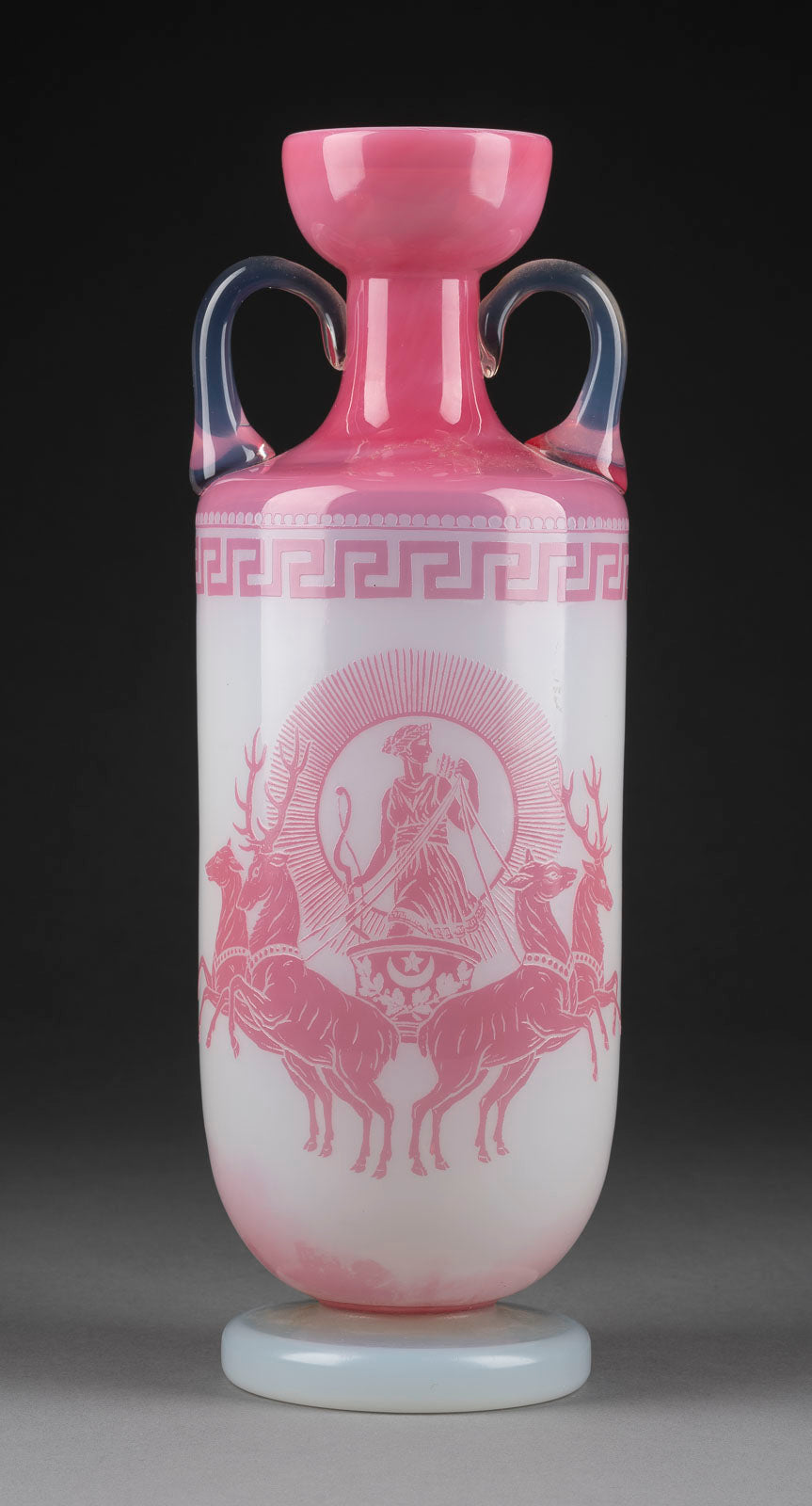
German Opaline Vase Diana Goddess 19-20th Century - Handled Etched Glass
German Opaline Vase Diana Goddess 19-20th Century - Handled Etched Glass
Couldn't load pickup availability
A Delicate and Rare German 19/20th Century Handled Opaline Vase Featuring the Goddess Diana
An exceptional and museum-quality German opaline glass vase featuring exquisite etched decoration depicting the goddess Diana. This delicate handled vase, dating from the late 19th or early 20th century, exemplifies the sophisticated glass-making traditions of German manufacturers during this golden age of decorative arts. The opaline glass's characteristic translucent milky appearance provides perfect canvas for the etched Diana decoration, while the elegant handle adds both functional and aesthetic interest. In excellent condition, this rare vase represents an exceptional acquisition opportunity for collectors of German glass, opaline ware, mythological subjects, or those seeking distinctive decorative objects combining technical mastery with classical beauty.
German Glass-Making - Historical Excellence
German glass-making traditions extend back centuries, with regions like Bohemia, Bavaria, and Thuringia producing glass of exceptional quality and beauty. The late 19th and early 20th centuries represented a golden age for German decorative glass, with manufacturers creating works combining traditional techniques with contemporary aesthetics. German glass from this period is renowned for technical excellence, artistic sophistication, and the integration of historical revival styles with modern innovation. Works by German glass houses are collected internationally and represent important chapters in decorative arts history.
19th/20th Century Dating - Transitional Period
The dating to the late 19th or early 20th century places this vase during a fascinating transitional period in decorative arts. This era saw the continuation of Victorian aesthetic traditions alongside the emergence of Art Nouveau and early modernism. German glass manufacturers during this period produced works that synthesized historical references with contemporary design sensibilities, creating pieces that honored tradition while embracing innovation. Glass from this transitional period documents evolving tastes and the extraordinary technical capabilities of period manufacturers.
Opaline Glass - Distinctive Material
Opaline glass represents one of the most distinctive and prized types of decorative glass. Characterized by its translucent, milky appearance (ranging from white to various pastel colors), opaline glass achieves its characteristic look through the addition of bone ash or other opacifiers to the glass batch. The resulting material possesses ethereal beauty, catching and diffusing light in ways that clear glass cannot. Opaline glass was particularly popular during the 19th century, appearing in French, Bohemian, and German production. The material's delicate appearance and technical demands make opaline pieces particularly valued by collectors.
Diana - Classical Mythology
The vase's decoration featuring Diana (Roman goddess of the hunt, moon, and nature, equivalent to Greek Artemis) connects to centuries of artistic tradition depicting classical mythology. Diana appeared frequently in decorative arts, symbolizing independence, natural beauty, and connection to the wild. Her associations with hunting, the moon, and virginity made her popular subject for artistic representation. The choice of Diana for this vase's decoration demonstrates the period's sophisticated engagement with classical culture and the enduring appeal of mythological subjects in decorative arts.
Etched Decoration - Technical Artistry
The etched decoration demonstrates sophisticated glass decoration techniques. Acid-etching involves protecting areas of glass with resist materials, then exposing unprotected areas to hydrofluoric acid which creates frosted, matte surfaces. This technique allows for detailed imagery and subtle tonal variations. The Diana figure's execution through etching required skilled artisans who understood both artistic design and technical processes. The etching's quality and detail distinguish fine period glass from lesser examples. The decoration's preservation demonstrates quality execution and careful ownership.
Handled Form - Functional Beauty
The elegant handle adds both functional utility and aesthetic interest to the vase. Handles on decorative glass serve practical purposes - facilitating safe handling and pouring - while contributing to overall design. The handle's form, attachment points, and integration with the vase's overall design demonstrate sophisticated glass-making and design sensibilities. Applied handles require additional technical skill, as they must be attached while glass is workable and must withstand thermal stress during cooling. The handle's successful execution and preservation testify to quality craftsmanship.
Delicate Character - Refined Aesthetic
The description as delicate emphasizes the vase's refined aesthetic and the care required in its creation and preservation. Delicacy in glass work results from thin walls, elegant proportions, and refined decoration - all requiring exceptional skill to achieve. This delicate character distinguishes fine decorative glass from more utilitarian production. The vase's survival in excellent condition after 100-150 years demonstrates both quality construction and careful stewardship. Delicate glass pieces command premiums for their beauty and the technical skill their creation required.
Rare Status - Collectibility
The description as rare emphasizes this vase's scarcity and special status. Rarity dramatically enhances collectibility and investment value - rare pieces by quality manufacturers command significant premiums. The rarity may reflect limited production, the specific combination of opaline glass with Diana decoration, or simply survival and availability. For serious collectors, rare works offer opportunities to acquire pieces that few others can obtain, while rarity ensures strong appreciation potential as collectors compete for scarce examples.
Excellent Condition - Preservation
The excellent condition after 100-150 years represents remarkable preservation. For glass, condition is paramount - any chips, cracks, or damage significantly affect value. Excellent condition allows the opaline glass's beauty, the etched decoration's detail, and the overall design to be fully appreciated while maximizing aesthetic appeal and investment value. The preservation suggests careful ownership and appropriate handling throughout the vase's history. Detailed condition documentation available to serious collectors.
Display and Function
This vase serves beautifully for both functional use with flowers and display as pure decorative art. The opaline glass's translucent quality creates beautiful effects when backlit or positioned near windows. The Diana decoration adds narrative interest while the elegant form ensures the vase enhances any setting. Ideal display locations include vitrines, mantels, shelves, or anywhere the vase can be properly lit to reveal the opaline glass's beauty and the etched decoration's detail.
Investment Value and Collectibility
German opaline glass with etched mythological decoration represents solid investment opportunities. The combination of German origin, late 19th/early 20th century dating, opaline glass material, Diana subject, handled form, and excellent condition creates strong appeal among collectors of German glass, opaline ware, mythological subjects, and decorative arts. As authentic period pieces become scarcer and appreciation for German glass continues, quality examples show consistent market performance. The vase's rarity and delicate beauty enhance investment potential.
Cultural and Historical Significance
This vase embodies German glass-making excellence, the late 19th/early 20th century's sophisticated decorative arts, and the enduring appeal of classical mythology in decorative objects. It represents the technical virtuosity of German craftsmen and the period's ability to create works combining beauty, function, and cultural reference. The vase connects viewers to this remarkable period while demonstrating glass art's capacity to achieve effects of extraordinary delicacy and refinement.
Collecting Context
This vase appeals to collectors of German glass, opaline ware, etched glass, mythological subjects, handled vases, and those seeking rare decorative objects combining technical excellence with classical beauty. It would enhance private collections, corporate holdings, or serve as centerpiece in collections focused on German decorative arts or opaline glass.
Available for viewing by appointment at Artemisia Fine Arts & Antiques Ltd, Malta. We provide expert consultation, condition assessment, insurance valuation, and international shipping with specialized glass handlers. This German opaline vase represents an exceptional acquisition opportunity. Serious inquiries from qualified collectors welcome.
Share